UAE eInvoicing: Five-Corner Model & Provider Guide
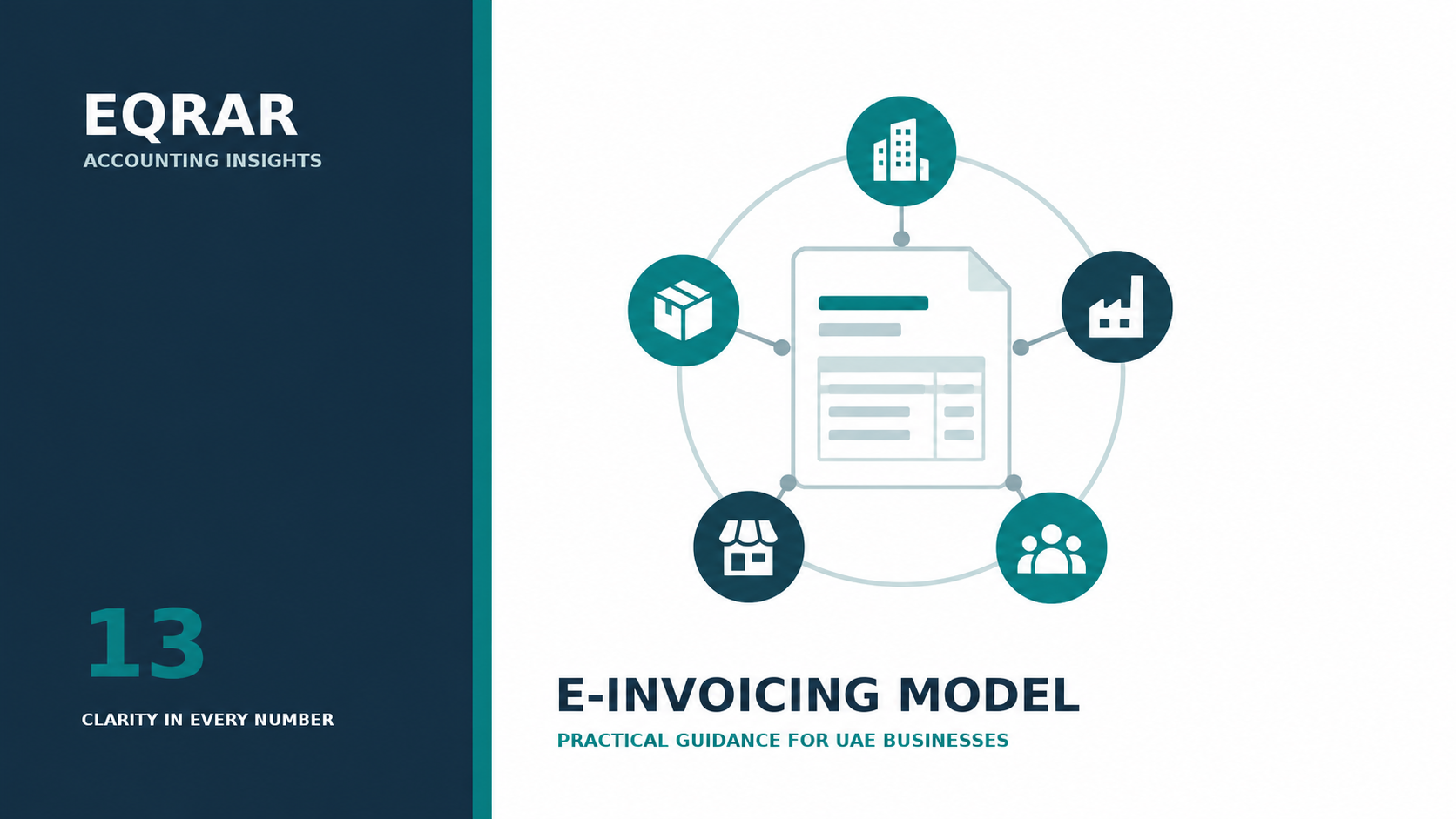
As UAE eInvoicing moves through practical testing, understanding how the system works is just as important as knowing the deadlines. The model does not simply send a digital invoice from seller to buyer. It connects both parties through Accredited Service Providers while the required tax data is reported within the government framework.
What is the 5-Corner Model?
The Ministry of Finance describes the UAE eInvoicing model around five main participants:
- Supplier issuing the invoice.
- Supplier’s Accredited Service Provider receiving and validating the invoice data.
- Buyer’s Accredited Service Provider receiving the eInvoice through the exchange network.
- Buyer receiving the invoice.
- Government reporting corner receiving the required tax data.
This creates two connected flows: invoice exchange between supplier and buyer, and tax-data reporting within the regulatory framework.
What happens when an invoice is issued?
The supplier submits invoice data to its provider. The provider validates the data and converts it into the required structured format where necessary, then transmits the eInvoice to the buyer’s provider. In parallel, the relevant tax data document is reported to the government corner.
Status messages confirm whether the invoice was successfully exchanged or whether errors need correction. This is why data quality is critical before transmission.
What do PINT AE and XML mean for a business?
The programme uses standardised invoice data so different systems can exchange information consistently. Business owners do not need to become XML specialists. The practical requirement is to ensure the accounting or ERP system can produce accurate fields in a form that can be integrated with the selected provider.
Why a PDF is not enough
A PDF may be readable by a person, but it is not structured machine-readable invoice data by itself. The Ministry of Finance explicitly states that PDF, Word files, images, scanned copies and email are not eInvoices under the UAE programme.
How to choose an Accredited Service Provider
The Ministry of Finance publishes and updates the list of accredited providers. When comparing providers, businesses should look beyond price.
| Area | What to review |
|---|---|
| Integration | Compatibility with ERP, accounting software, POS and other systems. |
| Data management | Validation, error handling and data transfer methods. |
| Security and compliance | Access controls, security framework and data protection. |
| Support and SLA | Response times and support during service issues. |
| Pricing | Subscription, invoice-volume or transaction-based pricing. |
| Scalability | Ability to handle branches and higher invoice volumes. |
| Experience | Provider background, product ownership and integration experience. |
Questions to ask before signing
- Do you already integrate with our current accounting system?
- What development work is required from our side?
- How are rejected invoices and missing data handled?
- How do we confirm successful exchange and reporting?
- How are branches and POS systems handled?
- Is a testing environment available before go-live?
- How is data secured and access controlled?
- What support is available during operational incidents?
What the finance team should prepare
The project is not purely technical. Finance teams should review customer and supplier data, VAT treatment, transaction types, credit-note processes, invoice numbering, currencies, branches and exception handling.
Start with a reliable master-data list covering legal names, tax registration details where relevant, addresses, country, currency, payment terms and transaction categories.
A practical readiness test
- Select a sample of 50 to 100 recent invoices.
- Check customer and supplier data completeness.
- Identify fields entered manually and prone to error.
- Review VAT, discounts, currencies and credit notes.
- Test unusual cases such as returns or advance payments.
- Document who is responsible for correcting rejected invoices.
Frequently asked questions
Does every in-scope business need an Accredited Service Provider?
Businesses subject to mandatory implementation need to work through an accredited provider under the official timetable.
Can any technology company provide the service?
Businesses should refer to the Ministry of Finance accreditation list and status rather than assume any technology vendor is automatically eligible.
Does the provider replace the accountant?
No. The provider performs a technical exchange and reporting role. Accurate accounting data, tax treatment and classification remain business responsibilities.
Does integration automatically mean replacing the ERP?
No. It depends on whether the current system can provide the required data and integrate with the selected provider.
Summary
The 5-Corner Model connects supplier, buyer, their service providers and the reporting framework. Successful implementation depends on clean data, documented processes and a provider that fits the business’s systems and scale.
If you need to review accounting data before technical integration, contact EQRAR.
Official source: UAE Ministry of Finance eInvoicing portal, programme guidance and ASP-selection guidance.